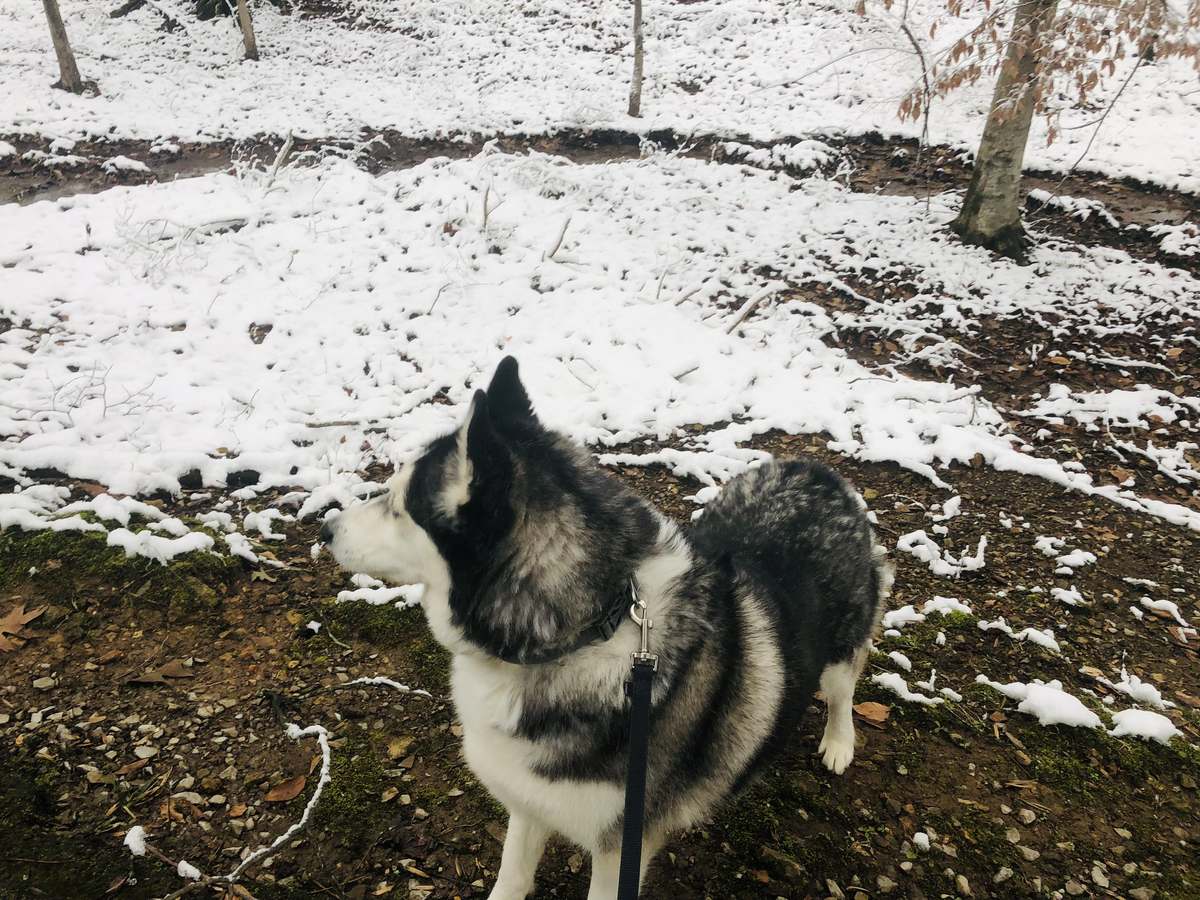
When Little Jay was young, grooming was mostly a war against fur. The double coat, the seasonal blowouts, the tumbleweeds of undercoat rolling across the kitchen floor — that was the story. I had a rhythm and it worked. Then he got older, and what I thought I knew about grooming him started to feel insufficient. His coat changed texture. He flinched when I hit spots that didn't used to bother him. Standing still on the grooming mat for long became uncomfortable to watch.
I started digging into what actually changes, and why. This article is the result of that research — written not for husky owners in general, but specifically for those of us trying to groom a dog whose body has been on this earth for eight, ten, twelve years. The grooming fundamentals are the same. How you execute them has to change.
Why Huskies Are Already Harder to Groom Than Other Dogs
Before we get into what changes with age, it's worth being honest about the baseline. Grooming a Husky is not like grooming most breeds. The double coat is the defining challenge — and if you own one, you already know this, but it's worth understanding the mechanics so the age-related changes make more sense.
The Double Coat: An Engineering Marvel That Creates Maintenance Obligations
A Husky's coat consists of two distinct layers that work as a system. The undercoat is short, dense, and wool-like — it traps warm air in winter and helps ventilate in summer. The outer topcoat (guard hairs) is longer and coarser, designed to repel water, block UV rays, and protect the skin from debris and insects. Together, these layers create a natural climate control system that is genuinely sophisticated — working in both cold and hot weather when maintained correctly.
The maintenance obligation that comes with this system is significant. Unlike single-coated breeds, Huskies shed in two distinct modes: a steady year-round baseline shedding, and two annual "coat blowouts" — typically in spring and fall — where they shed the entire undercoat over a period of three to six weeks. During a blowout, a single Husky can produce enough loose fur to fill multiple trash bags. This is not an exaggeration. It is a documented feature of the breed.
Never shave a Husky's double coat. This rule applies at every age — but becomes even more critical in senior dogs. Shaving disrupts the thermoregulation system, exposes the skin to UV damage, changes how the undercoat and topcoat grow back relative to each other (sometimes permanently altering coat texture), and strips the skin's natural protection layer. In senior dogs with already-thinning, more fragile skin, the consequences of shaving are worse than in younger dogs. If a groomer ever suggests shaving your Husky "to keep them cool," find a different groomer.
Husky Skin: Less Oily, But Not Problem-Free
Compared to many other breeds, Huskies produce relatively little skin oil, which is why they don't carry much of a "dog smell" and don't need bathing frequently. But this low-oil quality also means their skin is more vulnerable to dryness and irritation when bathed too often, groomed with harsh products, or exposed to environmental stressors. This matters increasingly as they age, when oil production naturally declines further.
The Coat Blowout: A Grooming Sprint That Comes Twice a Year
Most dogs shed consistently. Huskies do too — but they also have these concentrated episodes of mass undercoat release that require a temporary escalation of grooming effort. During blowouts, daily brushing becomes non-optional. Skipped sessions allow the releasing undercoat to become compacted against the skin, trapping moisture and heat, creating ideal conditions for hot spots and skin infections. In a young Husky with a robust immune system, this is a grooming inconvenience. In a senior Husky with a compromised immune system, it becomes a genuine health risk.
How a Senior Husky's Grooming Needs Diverge from a Younger One's
If you've been grooming your Husky for years, you have an established routine that worked. Here is what aging specifically changes about that routine — and why each change matters.
The Coat Thins and Changes Texture
Senior Huskies typically develop thinner, softer, and sometimes duller coats as they age. The undercoat may become less dense; the guard hairs may lose some of their coarseness and weather-resistance. This isn't purely cosmetic — a thinning coat offers less insulation, less UV protection, and less physical buffering for the skin underneath. It also mats differently: thinner fur can compact and mat faster than a dense healthy coat, particularly in areas where the dog rests frequently (elbows, flanks, the back of the hind legs). Additionally, coat texture changes can be a clinical signal — a suddenly dull, thinning, or coarse-feeling coat may indicate hypothyroidism, Cushing's disease, nutritional deficiency, or zinc-responsive dermatosis. Track coat condition actively, not just visually.
The Skin Becomes Thinner, Drier, and More Fragile
Skin elasticity and thickness decline with age in dogs just as in humans. Senior dog skin tears more easily, heals more slowly, and reacts more sensitively to friction, chemical products, and temperature extremes. What was a comfortable brush-out at age three may feel uncomfortably abrasive at age ten. Harsh shampoos that caused no reaction in younger years may now cause dryness, flaking, or irritation. And because older skin heals slowly, a small abrasion during grooming — a nick, a brush scrape on a bony prominence — carries a higher risk of infection than it would have years earlier. Every grooming contact with a senior Husky's skin requires a lighter touch than you're used to.
Arthritis and Joint Pain Change What Positions Are Tolerable
Roughly 65% of dogs over age 10 develop some form of arthritis. For a Husky, hip dysplasia — moderately prevalent in the breed — can accelerate joint decline. A grooming session that requires your Husky to stand still for extended periods, lift their legs, roll onto their side, or maintain specific positions may now be genuinely painful. Dogs don't complain loudly when in pain; they shift, lean, resist, or suddenly snap — behaviors that owners often misread as stubbornness rather than discomfort. If your senior Husky has started resisting grooming they used to accept, the first hypothesis should be pain, not attitude.
Stamina and Stress Tolerance Decline
Senior dogs fatigue faster and have lower tolerance for prolonged handling. A grooming session that a younger Husky could push through for 90 minutes may now need to be broken into two or three sessions across different days — one for the coat, one for nails, one for ears and eyes. Forcing a fatigued or stressed senior dog through a long grooming session doesn't just cause discomfort; it can elevate stress hormones, destabilize blood pressure, and in dogs with cardiac conditions, create real physiological risk. Read the signals: trembling, panting without physical exertion, attempting to lie down or escape, sudden stiffness — these mean stop, not push.
Grooming Becomes a Health Monitoring System
In younger dogs, grooming is primarily maintenance. In senior dogs, it becomes something more important: a regular, hands-on health inspection. Tumors, lipomas, cysts, skin infections, dental disease, ear infections, and nail overgrowth — all of which are more common in older dogs — are often discovered first during grooming sessions, not vet visits. A senior Husky that sees the vet every six months has 26 weeks between professional examinations. A senior Husky whose owner grooms carefully and attentively is receiving a partial health check multiple times a week. That early detection window matters enormously for outcomes.
The Grooming Routines: What, Why, and How for Senior Huskies
Each grooming routine below follows the same structure: what it is, why it matters (including the research and consequences of neglect), and specifically how to adapt it for a senior Husky.
Routine 1 — Brushing & Coat Maintenance
3–7× per weekBrushing a Husky means working through both the topcoat and the undercoat in systematic sections — a technique called "line brushing" — using an undercoat rake to access and remove loose fur from the dense inner layer, followed by a slicker brush to smooth and detangle the outer coat. A steel-tooth comb is used to check for remaining mats and tangles. This is not a single-pass, surface-level task. Done correctly, it takes 20–40 minutes for a full brushing session.
Compacted, un-brushed undercoat traps moisture against the skin, cutting off air circulation. This creates the ideal environment for hot spots — acute, painful skin infections that can develop rapidly and spread. Beyond infection risk, mat formation is physically painful: mats pull continuously on the skin as the dog moves, creating chronic low-grade pain that many owners miss because it doesn't produce obvious symptoms. In a senior dog with skin that tears more easily and heals more slowly, mats that go unaddressed can progress from discomfort to open wounds.
Regular brushing also stimulates blood circulation in the skin, distributes natural oils throughout the coat, and provides the physical contact opportunity to check for lumps, skin changes, and parasites. For a senior Husky, each brushing session doubles as a health inspection.
Use lighter pressure than you did when they were younger — senior skin bruises and irritates more easily. If your Husky has always tolerated vigorous brushing, reduce the force and watch for flinching around bony areas (hips, spine, elbows). Break full coat sessions into two shorter ones if standing becomes uncomfortable. Let them lie down and work around their position rather than insisting they stand throughout. During coat blowouts, switch to daily brushing but keep sessions short — 15–20 minutes — rather than one long session every few days. A detangling spray can reduce friction on coats that have become drier with age. Avoid high-velocity dryers that were standard before — for some senior dogs with cardiac or respiratory conditions, the intensity and noise can be stressful. Use a lower-velocity setting or towel-dry first.
Routine 2 — Bathing
Every 6–10 weeks (or as needed)Bathing a Husky involves fully saturating the double coat (which takes longer than most owners expect), applying a dog-appropriate shampoo, massaging it through both coat layers, and rinsing thoroughly — any shampoo residue left in the dense undercoat will irritate the skin and dull the coat. Blow-drying to remove trapped moisture follows. Huskies are naturally low-odor dogs and require far less frequent bathing than most breeds. Over-bathing strips the natural oils that protect their skin and coat.
Bathing removes accumulated environmental debris, allergens, dead skin cells, and loose undercoat that brushing alone can't fully address. When timed with coat blowouts, a bath followed by a thorough blow-dry helps dramatically loosen and release the undercoat, shortening the blowout period. Bathing is also a comprehensive opportunity to examine the entire skin surface — something difficult to do through a dry, dense coat.
Use lukewarm water rather than warm — senior dogs regulate body temperature less efficiently, and hot water can cause heat stress or skin irritation. Place a non-slip mat in the tub; senior dogs are at higher risk of falls, and a wet tub floor with an arthritic dog is a genuine injury risk. Use a shampoo specifically formulated for sensitive or senior dog skin — look for gentle, sulfate-free formulas with moisturizing ingredients like oatmeal or aloe vera. Avoid human shampoo and harsh medicated shampoos unless prescribed. After bathing, dry thoroughly — a wet coat held against the body causes chilling, particularly in senior dogs who thermoregulate less effectively. Do not use high-heat settings on dryers near older skin. Consider rinsing with a diluted conditioning spray after the bath to combat the increased skin dryness that comes with age. If your Husky has mobility issues, a professional groomer experienced with senior dogs — or a mobile grooming service that comes to your home — can make the bath significantly less stressful for a dog who struggles with car rides or standing on a wet surface.
Routine 3 — Nail Care
Every 2–3 weeksDog nails grow continuously. Unlike wild animals walking miles of rough terrain that naturally files nails down, domestic dogs — especially lower-activity senior dogs — don't wear their nails down adequately through normal movement. Nail trimming involves cutting the nail below the quick (the living tissue containing blood vessels and nerves), either with clippers at a 45-degree angle or with a grinding tool that gradually reduces nail length with less risk of accidentally cutting into the quick.
Overgrown nails are one of the most consequential and most underestimated grooming failures in senior dogs. When nails grow too long, they push the toes backward into hyperextension with each step — forcing the dog to redistribute their weight away from the natural contact point of the paw and toward the heels and joints. This altered gait places abnormal stress on the wrist joints (carpus), elbows, shoulders, knees (stifles), and hips. Over time, this compensatory posture accelerates joint damage, contributes to chronic muscle fatigue, and — according to the RSPCA — can directly accelerate the development of arthritis in dogs whose joints are already aging.
For a senior Husky already managing hip dysplasia or arthritis, this chain reaction from nail length → gait alteration → joint stress is not a minor concern. It is an active aggravator of pain they are already experiencing. The good news: regular trimming eliminates this entirely.
Senior dog nails are often thicker and more brittle than those of younger dogs, making clippers less effective and more likely to crack the nail. A nail grinder (rotary tool) is generally a gentler and more precise option for older dogs — it files gradually rather than applying sudden cutting force. This is especially important because overgrown senior nails often have a lengthened quick, meaning you must trim incrementally over several sessions rather than attempting to reach the ideal length in one cutting. Trim every 2–3 weeks rather than monthly. When trimming, support the joint above the paw rather than holding the paw itself — reducing joint torque during the process. If your Husky is arthritic, letting them lie down and working from a floor-level position is often more comfortable than lifting the paw to a grooming table height. Watch for nails that have begun to curl toward the pad — these require immediate professional attention and more frequent maintenance going forward.
Routine 4 — Dental Care
Daily brushing; professional cleaning annually or as directed by vetDental care means daily toothbrushing with a dog-specific toothbrush and enzymatic toothpaste — the enzymatic formulation breaks down plaque biologically, which is important because dogs cannot rinse and spit. This is supported by dental chews with the Veterinary Oral Health Council (VOHC) seal of approval, and supplemented by professional veterinary dental cleanings performed under anesthesia, which allow for thorough scaling below the gumline, dental X-rays, and full periodontal assessment.
Periodontal disease is the single most common health condition in dogs. Research from Cornell University's College of Veterinary Medicine confirms that 80–90% of dogs over age three have some component of periodontal disease. The Royal Veterinary College's VetCompass study found it was by far the most commonly diagnosed disorder in dogs — more prevalent than ear infections and obesity combined. And critically, a VetCompass analysis found that dogs aged eight and above are over three times more likely to be affected with periodontal disease than dogs aged two to four.
The consequences extend far beyond the mouth. Bacteria from infected gum tissue enter the bloodstream in a process called bacteremia, creating chronic systemic inflammation that is linked to cardiovascular disease, kidney damage, and liver damage. A 2021 peer-reviewed study published in Frontiers in Veterinary Science found a statistically significant association between severity of periodontal disease and cognitive dysfunction scores in aging dogs — dogs with worse dental disease showed greater cognitive impairment. For a senior Husky already managing multiple age-related conditions, untreated dental disease is not a cosmetic issue. It is an ongoing systemic insult to organs that are already under age-related stress.
Plaque forms on tooth surfaces within 24 hours of cleaning. Without homecare for one week, gingivitis develops in some patients; within three weeks, in all patients. This is why once-a-week brushing is not adequate — and why daily brushing, even imperfect daily brushing, produces vastly better outcomes than infrequent thorough attempts.
If your senior Husky has never accepted toothbrushing, don't abandon the effort — but start with what they will accept. Finger brushes, gauze pads wrapped around a finger, or even enzymatic dental gels applied to the gums without brushing are all better than nothing. Introduce slowly with positive reinforcement, starting with just a finger touching the gums and working toward the brush contact over days to weeks. Be watchful for signs that dental disease is already present: reluctance to chew, dropping food, bad breath that has worsened, pawing at the mouth, or visible brown tartar buildup on molars. These warrant a prompt veterinary dental evaluation. For professional cleanings in senior dogs, pre-anesthetic bloodwork is standard — and essential, as it confirms kidney and liver function before any anesthesia is administered. Owners sometimes delay professional cleanings out of concern about anesthesia risk in older dogs. The risk of uncontrolled dental disease to the heart, kidneys, and brain is far greater than the managed risk of anesthesia administered by a vet who has cleared the dog via bloodwork.
Routine 5 — Ear Cleaning
Every 2–4 weeks, or as neededEar cleaning involves applying a veterinarian-approved ear cleaning solution to the ear canal, gently massaging the base of the ear to loosen debris, and wiping away the loosened wax and dirt with a cotton ball. Never insert cotton swabs (Q-tips) into the ear canal — these push debris deeper and can injure the ear drum. The goal is to remove excess wax and debris from the visible parts of the ear canal, not to achieve a perfectly dry ear (the ear canal needs some moisture to function properly).
Ear infections (otitis externa) are among the most painful and common conditions in dogs. Excess wax, moisture trapped after bathing, and debris create a warm, moist environment ideal for bacterial and yeast overgrowth. Left untreated, ear infections progress from outer ear to middle ear, causing significant pain, hearing loss, and in severe cases, requiring surgical intervention. Senior dogs accumulate wax more readily than younger dogs, and their immune response to developing infections is slower — meaning infections can become established before the dog shows obvious signs of distress.
Increase ear inspection frequency for senior dogs — check at every grooming session even if you don't clean every time. Signs of infection include a dark brown or black discharge (different from normal pale-tan wax), an unpleasant odor from the ear, redness or swelling of the ear canal, the dog frequently shaking their head or scratching at the ear, or pain responses when you touch the ear. Any of these warrant a vet visit, not a home cleaning attempt — introducing solution into an already-infected or inflamed ear can cause additional pain and damage. Use only veterinarian-approved cleaning solutions; avoid alcohol-based cleaners which dry out and irritate already-sensitive senior ear tissue. If your Husky has always had healthy ears and you suddenly notice increased wax production or discharge, this can sometimes signal a systemic issue (hypothyroidism, allergies) — mention it to your vet in the context of the broader health picture.
Routine 6 — Eye Care
Daily inspection; wiping as neededEye care involves gently wiping away any discharge from the inner corner of the eye using a damp, soft cloth or dog-safe eye wipe — wiping outward, away from the eye. It also means regular inspection of the eye and surrounding tissue for changes in clarity, redness, cloudiness, or unusual discharge. Huskies are genetically predisposed to several eye conditions — hereditary cataracts (which can appear as early as 6–18 months), Progressive Retinal Atrophy (PRA), corneal dystrophy, and glaucoma — making eye monitoring especially important in this breed specifically.
Senior dogs develop dry eye (keratoconjunctivitis sicca, or KCS) at higher rates than younger dogs — the tear glands produce less moisture, leading to irritation, chronic discharge, and vulnerability to eye infections. In Huskies, this combines with their breed-level predisposition to hereditary eye conditions. Glaucoma — a painful buildup of pressure in the eye — requires emergency veterinary attention when it occurs acutely, as it can cause permanent blindness within hours if untreated. Cataracts, more visible as milky cloudiness in the lens, develop slowly but can become dense enough to significantly impair vision — and in diabetic dogs, can appear rapidly.
Inspect eyes during every grooming session — it takes ten seconds and catches changes early. Normal eye discharge in a healthy dog is minimal and clear to slightly rust-colored (from porphyrins in the tear film). Abnormal discharge is thick, yellow, green, or white, and warrants veterinary evaluation. If your Husky's eye surface appears dry, dull, or if they squint frequently, ask your vet about artificial tear drops — these are safe, inexpensive, and can significantly improve comfort for dry-eye dogs. Never use human eye drops without veterinary guidance. Schedule annual eye examinations with a veterinary ophthalmologist for senior Huskies — general veterinary visual assessments do not catch early-stage retinal degeneration or glaucoma reliably. Wipe only the outer corner and the area below the eye — never wipe across the eye surface itself, and never use anything other than water or a veterinarian-approved eye cleaning product near the eye.
Routine 7 — Paw & Pad Care
Weekly inspection; trimming as neededPaw care involves three components: trimming the fur that grows between and around the paw pads (which mats easily and collects debris), inspecting and conditioning the paw pads themselves, and monitoring for cracks, cuts, foreign objects, or overgrown interdigital fur. Huskies grow significant fur between their toes — a trait suited to snowshoeing across tundra, but one that creates maintenance needs in a domestic setting. The paw pads themselves are thick and durable, but can crack in dry conditions or sustain chemical burns from road salt and de-icing agents.
Matted interdigital fur is uncomfortable, traps moisture, and creates infection-prone conditions between the toes. Overgrown fur also reduces traction on slick floors — a meaningful safety concern for a senior dog with balance and coordination that are already declining. Cracked or damaged paw pads are painful and can become infected. In senior dogs, whose immune response to localized infections is slower, a small pad injury that a younger dog would heal quickly can progress into a more significant wound.
Seasonal considerations matter especially: in winter, road salt and chemical de-icers cause chemical burns on the pad surface if left in contact for extended periods. In summer, asphalt and pavement surfaces can reach temperatures that cause thermal burns. Senior dogs with reduced pain sensitivity may not react visibly to these exposures until significant damage has already occurred.
Keep interdigital fur trimmed short — flush or slightly above the pad surface — to maximize traction and minimize mat formation. This is especially important for senior dogs who may be navigating hardwood or tile floors with reduced coordination. Apply a pet-safe paw balm or wax (unflavored varieties are safest) monthly to prevent pad cracking — senior pads are drier and more crack-prone. After winter walks on salted roads, rinse paws in lukewarm water and dry thoroughly before the dog licks them — salt ingestion causes gastrointestinal upset, and the chemical residue will continue damaging the pad if not removed. Inspect between the toes at every grooming session — foreign objects, mats, and early signs of infections (swelling, redness, discharge) hide easily in this area and are missed if you're only brushing the outer coat. For dogs with arthritis in the lower limbs, paw handling should be done with the leg supported in its natural relaxed position — avoid pulling the leg forward or backward into an extended position.
You're Doing More Than Grooming
When I started adjusting how I groomed Little Jay — shorter sessions, softer tools, more breaks, more attention to the things I used to rush past — something shifted in how those sessions felt. They became slower and quieter. He relaxed into them differently. I realized I was no longer just managing his coat. I was checking in on his whole body, building a picture of how he was doing week by week, noticing the small changes before they became big problems.
That is what senior grooming really is. It is ongoing, gentle surveillance — dressed up as something as ordinary as brushing a dog. The coat you maintain keeps the skin beneath it healthy. The nails you trim keep the joints above them from compensating. The teeth you brush keep the heart and kidneys connected to a mouth that isn't silently inflaming them. It all matters. And you are the one person positioned to catch what no vet visit on a six-month schedule can catch on its own.
Go gently. Take your time. Pay attention. Your senior Husky doesn't need a perfect grooming session — they need a consistent, caring presence who notices them. That's already you.
Nothing in this article constitutes veterinary medical advice. All content is for informational and educational purposes only. Grooming needs vary significantly between individual dogs based on health status, coat type, medical history, and temperament. Always consult your licensed veterinarian before changing your dog's grooming routine, particularly if your dog has known skin conditions, joint disease, cardiac conditions, or other health issues.
Where specific conditions are mentioned — including periodontal disease, arthritis, hypothyroidism, glaucoma, and others — these require formal veterinary diagnosis and should not be self-diagnosed or self-treated based on content in this article. Statistics cited reflect population-level research and may not apply to every individual dog.
This article may contain affiliate links to products we discuss. These do not affect our editorial content or recommendations.