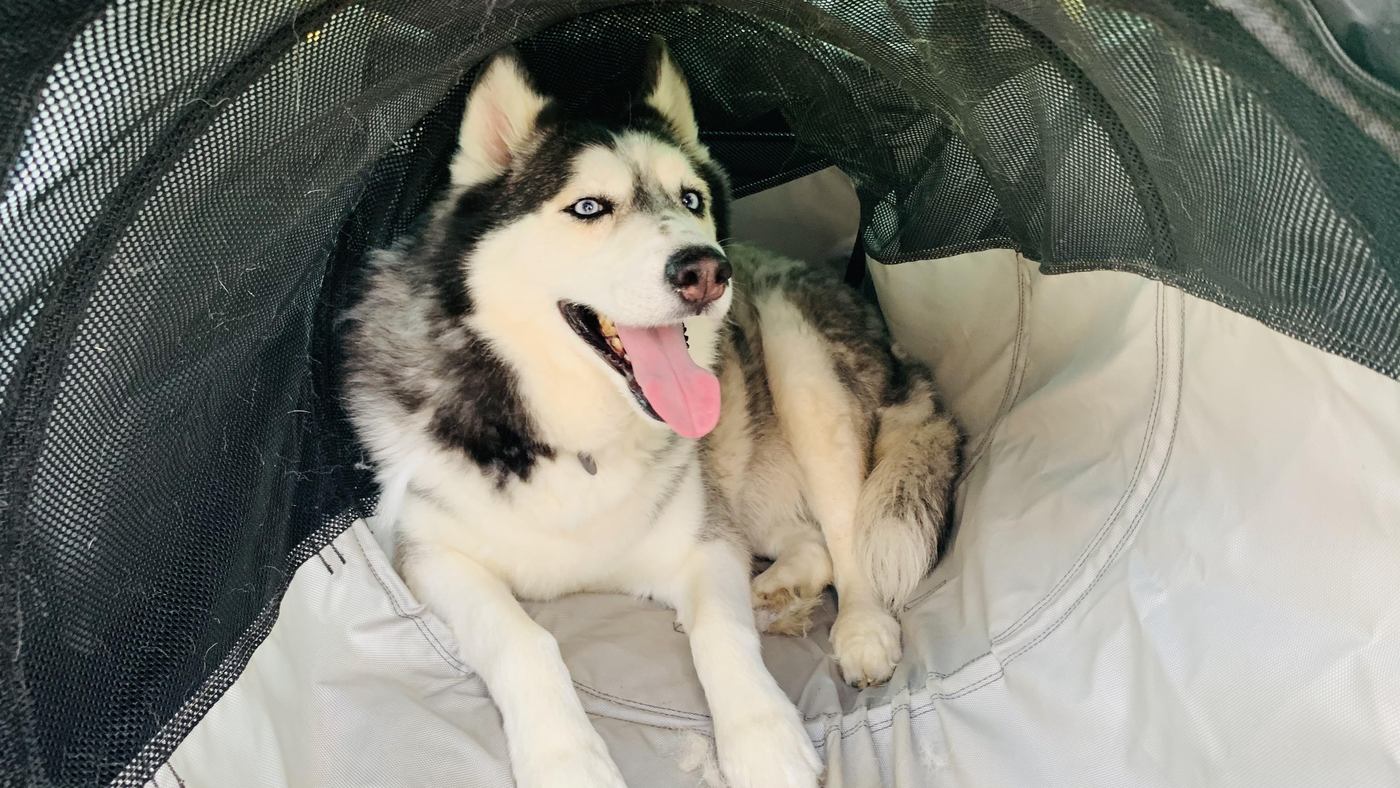
Defining "Young" vs. "Senior" in Huskies
Before we dive into the differences, we need to establish what we mean by "young" and "senior" in the context of Siberian Huskies specifically. These terms aren't arbitrary — they reflect real biological thresholds, though the veterinary community continues to refine exactly where to draw the lines.
Post-puppyhood through mature adulthood. Physically, these dogs are at or near peak function: maximum muscle mass, robust immune response, intact joint cartilage, and full cognitive capacity. Most Huskies in this range can handle significant exercise loads without recovery issues. Body weight tends to be stable.
The 2019 AAHA Canine Life Stage Guidelines classify dogs as "senior" when they've entered the last 25% of their breed-specific estimated lifespan. For Huskies (lifespan ~12–14 years), this places the senior threshold at roughly 8–9 years. "Geriatric" typically applies at 11+ years, when decline accelerates noticeably.
It's worth noting that Huskies, as a medium-to-large working breed, hit their senior threshold slightly earlier than small breeds. A 5-kg Chihuahua might not be considered senior until age 11; a 27-kg Husky crosses that threshold closer to 8. This has practical implications: many Husky owners don't start thinking about senior care until 9 or 10, when the biological changes have already been underway for a year or two.
The American Animal Hospital Association's 2019 guidelines define the senior life stage as the last 25% of a dog's expected lifespan, and recommend semi-annual wellness visits for dogs in this stage — a shift from the annual schedule appropriate for younger adults. Huskies typically transition into senior care protocols at 8–9 years of age under these guidelines.
One more important framing: the difference between a young Husky and a senior Husky is not simply "they slow down." The biological changes are systemic and multi-layered — affecting joints, muscles, brain, immune system, metabolism, senses, and sleep simultaneously. Understanding each one separately is the key to managing them effectively.
The 7 Key Differences at a Glance
Here's the big picture before we go deep on each one. These are the seven areas where the scientific literature consistently shows meaningful differences between young adult and senior Huskies:
Characteristic 1 — Joint Health & Mobility: From Effortless to Arthritic
What It Is
Osteoarthritis (OA) is the progressive deterioration of cartilage that lines the joints. In a young Husky, joint cartilage is thick, well-hydrated, and slippery — absorbing shock and enabling the full range of motion this breed was designed for. In a senior Husky, that cartilage has thinned, the synovial fluid that lubricates joints has decreased, and the underlying bone may have developed compensatory spurs (osteophytes). The result is the stiffness, reluctance to move, and pain that many owners first notice when their dog hesitates at the stairs or doesn't jump up with the enthusiasm of their youth.
Young vs. Senior: The Difference
A young Husky's joints function essentially without friction or pain. They can leap, sprint, and change direction without consequence. A senior Husky's joints are frequently stiff, particularly after rest. The stiffness typically improves with gentle movement — which is why many dogs with arthritis appear to "warm up" after their first few minutes of a walk — but returns after prolonged rest or vigorous activity.
The Numbers
The 2018 UK primary-care study (Scientific Reports) found that while OA can technically begin at any age, it becomes clinically significant predominantly in the 8–13 year range — precisely the senior window for Huskies. North American radiographic data from referral populations puts OA prevalence at around 20% in dogs over age 1, climbing to approximately 80% in dogs over 8. The gap between those figures represents the accumulation of years of joint wear, genetic predisposition, and compounding weight loading.
Huskies are moderately predisposed to hip dysplasia — a malformed hip joint that accelerates arthritic deterioration. Their hip architecture, combined with the high-impact activity most young Huskies are engaged in, sets the stage for accelerated joint wear. By the time your Husky is 8, the radiographic reality of their joints often precedes what you can observe behaviorally by a year or two.
Implications for Senior Husky Care
The most important implication is that pain management and joint protection need to begin before obvious lameness appears. By the time a dog is visibly limping or refusing walks, arthritis is usually well advanced. Early intervention — joint supplements, weight management, modified exercise — can meaningfully delay the progression from subclinical to functionally limiting OA.
What You Can Do
- Schedule an orthopedic exam with your vet at age 8, including radiographs of hips and elbows, regardless of whether you see obvious symptoms
- Begin glucosamine and chondroitin supplementation at age 7–8 (discuss exact products and doses with your vet — quality varies enormously between brands)
- Add omega-3 fatty acids (EPA/DHA from fish oil) — published veterinary literature supports their anti-inflammatory effect on joint tissue
- Eliminate repetitive high-impact activity (jumping onto vehicles or furniture, long runs on pavement) and replace with swimming, soft-surface walks, and shorter, more frequent outings
- Install ramps or steps to eliminate jumping impact on all entry/exit points — trucks, couches, car seats
- Maintain lean body weight rigorously: every extra kilogram adds roughly 4× that force to the hip joint with each step
Characteristic 2 — Muscle Mass & Strength: The Silent Erosion of Sarcopenia
What It Is
Sarcopenia is the age-related, disease-independent loss of lean muscle mass. It's not the same as being underweight or malnourished — it's a fundamental shift in how aging bodies build and break down protein. In young dogs, the body is in relative equilibrium: muscle protein is synthesized and catabolized at similar rates. In older dogs, synthesis slows significantly while catabolism continues at the same rate, creating a net deficit. Over time, this deficit compounds into visible, measurable muscle loss — most pronounced in the hindquarters and back.
Young vs. Senior: The Difference
A young Husky has well-developed, symmetrical musculature — visible through the haunches and loin, giving them the powerful rear-end drive characteristic of sled dogs. A senior Husky with sarcopenia begins to show a pronounced asymmetry: full, normal muscle mass in the front half of the body while the hindquarters become visibly wasted. The hips and spine become more prominent, the back legs weaker and less reliable on uneven ground. Critically, a dog can maintain body weight even as they lose muscle, because increasing fat mass masks the lean loss — making owner-detection of sarcopenia genuinely difficult without a vet assessment.
The Numbers
Research from the landmark Purina Labrador study (Lawler et al., 2008) found that measurable lean body mass decline begins around age 6 in dogs, well before most owners start thinking about "senior" concerns. A 2012 study in the American Journal of Veterinary Research comparing young (1–5 years) to old (8+ years) Labrador Retrievers found significantly lower epaxial muscle mass via ultrasound and CT in older dogs — confirmed by muscle condition scoring. Senior dogs require approximately 50% more dietary protein than younger adults to achieve the same rate of muscle protein synthesis, according to nutritional research compiled by the Royal Canin Academy and published veterinary nutrition literature.
Sarcopenia is not just a cosmetic issue. Muscle loss increases the risk of falls and fractures, worsens arthritis (the muscles that protect joints are weaker), reduces metabolic rate (contributing to obesity), dampens immune function, and is directly associated with shorter lifespan in dogs. In a French guide dog study (Hua et al.), dogs exhibiting two or more components of "frailty syndrome" — with sarcopenia as a key component — had significantly elevated mortality risk.
Implications for Senior Husky Care
Sarcopenia is the condition most owners are least prepared for because it looks like simple aging. The practical implication: senior Huskies need more protein, not less — the opposite of what many people assume. A common mistake is switching to a "light" or low-calorie senior food when a dog gains weight, without recognizing that the lean mass loss is the underlying driver.
What You Can Do
- Ask your vet to perform a muscle condition score (MCS) at every visit from age 7 onward — it's quick, non-invasive, and catches muscle loss early
- Transition to a senior diet with a higher protein density (look for 25–30% crude protein or higher on a dry matter basis) — discuss specifics with your vet
- Maintain regular low-impact exercise: swimming and gentle resistance walking (slight inclines) are the most effective interventions for preserving muscle in aging dogs
- Consider omega-3 supplementation — EPA and DHA have documented anti-catabolic effects on muscle tissue in multiple species
- Don't confuse a stable weight with a healthy body composition — your dog can be gaining fat while losing muscle simultaneously
Characteristic 3 — Brain Function & Cognition: When the Lights Dim
What It Is
Canine Cognitive Dysfunction (CCD), often called "dog dementia," is a neurodegenerative condition that shares striking biological similarities with Alzheimer's disease in humans. As a Husky ages, the brain accumulates amyloid-beta plaques (starting around age 9), loses neuronal density, experiences reduced cerebral blood flow, and shows progressive epigenetic changes that disrupt memory, spatial orientation, and sleep regulation. The result is a dog who seems "somewhere else" — confused in familiar spaces, less responsive to their name, pacing without purpose, or forgetting housetraining they've maintained for a decade.
Young vs. Senior: The Difference
A young Husky is alert, responsive, curious, and remembers everything. They learn new commands quickly, navigate their environment with precision, and their personality is consistent and engaged. A senior Husky with developing CCD may start with subtle changes — slightly slower responses, occasional disorientation, less enthusiastic greetings — that gradually progress to more obvious confusion, day/night reversal, and in advanced cases, house soiling and apparent anxiety without external cause.
The Numbers
The Dog Aging Project's 2022 study is the most statistically robust dataset on this question: across 15,019 companion dogs, every additional year of age was associated with a 52% increase in the odds of cognitive dysfunction. Among dogs of the same age, those rated as physically inactive had 6.47 times higher odds of CCD compared to very active dogs — arguably the strongest evidence we have that exercise is a meaningful cognitive protective factor for aging dogs.
Perhaps most alarming: a large cross-sectional study found that while 14.2% of dogs showed CCD symptoms on owner questionnaires, only 1.9% had been formally diagnosed by a veterinarian. This isn't a reflection of poor veterinary care — it's a reflection of how gradually and subtly cognitive decline presents, and how easily owners attribute early signs to "just getting old."
CCD in dogs involves the accumulation of amyloid-beta plaques in the frontal cortex from around age 9 onward. These same plaques are the hallmark of Alzheimer's disease in humans. This is why researchers at institutions including UC Davis and the Dog Aging Project specifically study canine cognitive decline as a translational model for human dementia research. The progression, brain regions affected, and clinical presentation are remarkably parallel.
What You Can Do
- Watch for the DISHAA signs: Disorientation, altered Interactions, Sleep-wake changes, House soiling, Activity changes, Anxiety. Any cluster of these warrants a vet conversation
- Maintain consistent, daily exercise — the Dog Aging Project data shows physical activity is strongly protective against cognitive decline
- Continue learning new things: "teach an old dog new tricks" isn't just a saying — novel cognitive tasks and enrichment slow cognitive erosion
- Ask your vet about prescription senior diets formulated for cognitive support (Hill's b/d, Purina Neurocare) — clinical trials show modest but real benefits
- Discuss selegiline (the only FDA-approved medication for canine CCD) with your vet if behavioral signs are present
- Keep your dog's environment consistent and navigable: night lights, ramps, familiar furniture arrangement help a cognitively declining dog maintain orientation
Characteristic 4 — Immune Function: The Aging Defense System
What It Is
Immunosenescence is the formal term for age-related immune system decline. It has two simultaneous, seemingly paradoxical components: the adaptive immune system becomes less responsive and precise over time, while the innate immune system shifts into a state of chronic low-grade activation. The result is a dog who is simultaneously less capable of mounting a strong targeted immune response (to vaccines, novel infections, or cancer surveillance) and more prone to chronic, low-grade systemic inflammation — a state researchers now call "inflammaging."
Young vs. Senior: The Difference
A young Husky's immune system is robust and precisely calibrated. It responds aggressively to novel threats (infections, parasites), maintains effective cancer surveillance, and resolves inflammation cleanly once a threat is neutralized. A senior Husky's immune system generates elevated baseline levels of inflammatory cytokines (IL-6, IL-1β, TNF-α) — effectively running a low-level inflammatory "fire" constantly. This chronic inflammation is directly linked to the development and acceleration of arthritis, kidney disease, heart disease, and cancer in aging dogs.
The Numbers
A 2025 study in Scientific Reports — specifically studying companion dogs to assess translational immune markers of aging — found that lymphocyte counts and red blood cell counts both significantly declined in aged (roughly 7–10 years) and geriatric (10+ years) dogs compared to young dogs. Platelet counts significantly increased in geriatric dogs — a pattern that parallels human aging and is associated with increased inflammatory and clotting risk.
A 2025 review in the Journal of Veterinary Internal Medicine on immunosenescence and inflammaging in dogs and cats confirmed that thymic atrophy — the shrinkage of the immune organ responsible for producing T-cells — is a fundamental component of canine aging. As the thymus shrinks, T-cell production decreases, disrupting the balance of immune cell subtypes that coordinate the body's defense responses.
Immunosenescence has a direct bearing on cancer risk. One function of the immune system in young dogs is constant surveillance and destruction of abnormal cells before they become tumors. As immune surveillance declines with age, pre-cancerous cells have a better chance of escaping detection and progressing. This is one reason cancer accounts for approximately 31% of senior Husky deaths — not because Huskies are unusually cancer-prone, but because all dogs accumulate cellular mutations over time, and their aging immune system becomes progressively less effective at catching them.
What You Can Do
- Keep vaccinations current and discuss senior-specific titer testing with your vet — vaccine response can change with age
- Address inflammaging through diet: omega-3 fatty acids (EPA/DHA) have documented anti-inflammatory effects; antioxidant-rich fresh foods and certain prescription senior diets can help modulate chronic inflammation
- Manage dental health aggressively — periodontal disease generates constant bacteremia that feeds systemic inflammation and stresses aging kidneys and heart
- Don't skip biannual bloodwork — immune dysfunction often shows up as changes in complete blood count (lymphocyte counts, platelet changes) before clinical disease is apparent
- Support gut microbiome health with probiotics: Lactobacilli populations specifically decline with age in dogs, and a healthy microbiome has documented roles in immune regulation
Characteristic 5 — Metabolism, Organ Function & Weight: The Slowing Engine
What It Is
Aging changes the efficiency of every major metabolic organ — the kidneys, liver, thyroid, and heart. In young dogs, these organs run with significant reserve capacity: they can handle stress, process medications efficiently, and maintain homeostasis even under load. In senior dogs, reserve capacity shrinks. The kidneys concentrate urine less efficiently and are more vulnerable to toxins and long-term NSAID use. The liver metabolizes drugs and detoxifies compounds more slowly. The thyroid may underperform (hypothyroidism — more common in Huskies than in many breeds). The heart accumulates valve wear. Taken together, these changes fundamentally alter how a senior Husky processes food, medication, stress, and environmental challenges.
Young vs. Senior: The Difference
A young Husky can eat almost anything, bounce back from illness quickly, and clear medications efficiently with minimal side effects. A senior Husky requires careful management at every level: medications carry higher risks because clearance is slower; dietary changes must be gradual because gut and metabolic adaptation takes longer; even mild dehydration becomes more dangerous because the kidneys have less reserve to compensate. Weight management becomes paradoxically harder: lower metabolic rate means fewer calories are needed, while muscle loss means body weight can look stable even as composition worsens.
The Numbers
A comprehensive 2024 review in MDPI Cells summarized the multi-organ changes of canine aging: kidney function decline is among the most clinically significant changes, with chronic kidney disease (CKD) becoming increasingly common after age 9. This is particularly relevant for Huskies on long-term NSAIDs (like carprofen) for arthritis — regular kidney function monitoring becomes essential rather than optional.
| Organ / System | Young Husky (1–7 yrs) | Senior Husky (8+ yrs) | Management Priority |
|---|---|---|---|
| Kidneys | High reserve; efficient filtration | Reduced filtration rate; CKD risk rises | Regular urinalysis + blood BUN/creatinine |
| Liver | Efficient drug metabolism; full detox capacity | Slower metabolism; elevated drug toxicity risk | Liver enzyme panels; careful medication dosing |
| Thyroid | Normal hormone output | Hypothyroidism increasingly common | Annual T4 testing after age 7–8 |
| Heart | Strong, clean valves; full output | Valve wear accumulates; efficiency declines | Cardiac auscultation at every exam |
| Metabolic rate | Higher; food calories burn efficiently | Lower; same diet = weight gain | Adjust portions downward; maintain lean mass |
What You Can Do
- Request a comprehensive metabolic panel and urinalysis at minimum once per year — twice per year for dogs on long-term medications or with known conditions
- Test thyroid function annually starting at age 7–8: hypothyroidism in Huskies is underdiagnosed and causes weight gain, lethargy, coat changes, and cognitive dulling that is easily confused with "just aging"
- Adjust caloric intake proactively rather than reactively — don't wait for visible weight gain before reducing portions
- Ensure excellent hydration: senior dogs dehydrate more easily, and kidney function decline worsens this risk. Fresh water access at all times, and consider wet food for additional moisture intake
- If your dog is on any long-term medication, discuss the monitoring schedule with your vet — what was "set it and forget it" at age 4 requires active blood monitoring at age 10
Characteristic 6 — Senses: The Gradual Dimming of the World
What It Is
Siberian Huskies have unusually complex relationships with their senses. Their vision is already distinctive among dog breeds — they're the only breed for which heterochromia (different-colored eyes) is a breed standard, and they're predisposed to hereditary eye conditions from a young age. As they age, sensory decline adds a new layer of complexity: hearing loss, vision deterioration, and olfactory decline all develop gradually and are easily mistaken for behavioral changes or simple "slowing down."
Young vs. Senior: The Difference
A young Husky is hyperaware — they respond to sounds outside the range of human hearing, navigate complex environments effortlessly, and use scent information to build detailed models of their world. A senior Husky's senses gradually narrow. Nuclear sclerosis (a bluish-grey haziness to the lens) is nearly universal in dogs over 8 and causes mild vision blur without significantly impairing function. True cataracts, if present, cause more significant vision loss. Hearing loss — typically high-frequency first — means the dog seems to "ignore" commands that they're actually not hearing. Olfactory decline is the least-studied but may significantly affect how senior dogs experience enrichment and their environment.
The Numbers
A 2020 Japanese study on physical signs of canine cognitive dysfunction (PMC) found that vision impairment and balance disturbances began increasing noticeably from age 10 onward in their survey population. Among dogs 14 years and older, 18% met criteria for full cognitive dysfunction — and vision impairment, smell disturbance, and tremor were all significantly associated with CCD status. This underlines a crucial point: sensory loss and cognitive decline are intertwined, not independent. A dog who can no longer see or hear well is receiving less environmental input, which accelerates cognitive erosion.
Huskies face a higher-than-average hereditary eye disease burden: hereditary cataracts (can appear as early as 6–18 months in some lines), Progressive Retinal Atrophy (sex-linked, more common in males), corneal dystrophy, and age-related nuclear sclerosis. Senior Huskies should have annual eye exams with a veterinary ophthalmologist — not just a general vet screening — to catch progressive conditions before they cause irreversible damage.
What You Can Do
- Learn to distinguish nuclear sclerosis (normal aging, bluish haze, doesn't significantly impair vision) from cataracts (white opacity, causes real vision loss) — your vet can confirm which is present
- Annual ophthalmologic exam with a board-certified veterinary ophthalmologist from age 8 onward
- Adapt training and communication for hearing loss: hand signals become more reliable than voice commands; avoid startling a hard-of-hearing dog from behind
- Maintain a consistent home layout for dogs experiencing vision decline — moving furniture frequently is disorienting for a dog relying more heavily on spatial memory to navigate
- Continue scent-based enrichment games — sniff work and nose games engage the olfactory system and provide cognitive stimulation that compensates for reduced physical activity
Characteristic 7 — Sleep Architecture & Behavioral Patterns: The Disrupted Night
What It Is
Sleep is not simply rest — it's an active biological process during which the brain clears metabolic waste (including the amyloid-beta associated with CCD), consolidates memories, and regulates hormonal systems. The architecture of sleep — the ratio of NREM to REM sleep, the duration of sleep cycles, and the responsiveness of the sleep-wake clock — changes measurably with age. Senior dogs don't just sleep more; they sleep differently.
Young vs. Senior: The Difference
A young Husky's sleep is deep, consolidated, and efficient — they fall asleep quickly, cycle through sleep stages normally, and wake refreshed. A senior Husky's sleep becomes more fragmented: shorter cycles, more frequent awakening, and in cases of cognitive dysfunction, a partial reversal of the day/night schedule. Night becomes a time of confusion, pacing, or vocalization, while daytime is spent in prolonged, less restorative dozing.
The Numbers
A 2023 polysomnographic (brain wave) study published in Frontiers in Veterinary Science performed detailed EEG sleep recordings on senior dogs and found direct correlations between sleep quality and cognitive test performance. Dogs who spent more time in deeper NREM sleep showed better problem-solving and memory scores. Critically, sleep and cognitive function appear to form a bidirectional feedback loop: poor sleep accelerates amyloid accumulation (which drives CCD), and CCD disrupts sleep architecture further — a vicious cycle.
Beyond CCD, pain is one of the most underappreciated drivers of sleep disruption in senior dogs. Arthritis pain that a dog manages to mask during active daytime hours becomes more apparent when they lie still for hours at night — leading to restlessness, repeated position changes, and early morning waking.
What You Can Do
- Invest in an orthopedic memory foam bed — pressure relief directly reduces pain-related nighttime restlessness and improves sleep quality in arthritic dogs
- Maintain a consistent daily routine: structured sleep and wake times help regulate circadian rhythm in dogs experiencing early cognitive changes
- If nighttime restlessness is new, treat it as a medical symptom first — rule out pain, kidney disease (increased urination urgency), and cognitive dysfunction before assuming it's "just old age"
- Discuss melatonin with your vet — preliminary evidence supports its use for normalizing sleep-wake cycle disruption in senior dogs with CCD
- Keep the sleeping area calm, warm, and consistently located — temperature regulation is less efficient in senior dogs, and cold environments exacerbate arthritic stiffness overnight
Closing: The Dog You Still Know
Reading through seven categories of biological decline isn't exactly an uplifting exercise. But I want to be clear about what all of this science actually means at the level of your individual dog.
When Little Jay hesitated at the truck tailgate for the first time, I didn't immediately understand all of the biological processes behind that moment. I just knew my dog — the one who had made that jump hundreds of times — needed something to change. The science came later. What mattered first was paying attention.
"The body changes. The dog doesn't. Underneath every arthritic hip and cloudy eye is the same personality, the same loyalty, the same specific Husky who chose you."
— Bowen, Senior HuskyThe most important thing this article can give you is not anxiety about a list of things going wrong — it's a framework for understanding what you're seeing. When your Husky is slower to rise in the morning, you now know that's likely OA, not laziness. When they seem confused at night, you know that might be the beginning of cognitive changes, not stubbornness. When they're losing rear-end muscle despite eating the same diet, you know that's sarcopenia, not neglect.
Understanding leads to action. And with senior Huskies, the right action at the right time — adjusting protein intake, adding joint support, scheduling that ophthalmology appointment, getting the biannual bloodwork done — genuinely extends and improves the years you have left together.
The differences between a young Husky and a senior one are real, measurable, and in some cases dramatic. But so is the opportunity to make those senior years genuinely good ones. That's worth knowing — and worth acting on.
Quick Reference: 7 Key Changes at a Glance
| # | Change | When It Begins | Key Stat | Owner Action |
|---|---|---|---|---|
| 1 | Joint / OA | Gradual from ~6; clinical at 8+ | ~80% OA signs by age 8+ | Supplements, ramps, soft exercise, lean weight |
| 2 | Muscle Loss (Sarcopenia) | Starts ~age 6–7 | Seniors need ~50% more protein | High-protein diet, resistance walking, MCS scoring |
| 3 | Cognition (CCD) | Plaques from ~age 9 | 28% at 11–12 yrs; 68% at 15–16 yrs | Exercise, enrichment, DISHAA monitoring, vet discussion |
| 4 | Immune Decline | Progressive from ~age 7+ | Lymphocytes significantly decline in aged dogs | Omega-3s, probiotics, dental care, biannual bloodwork |
| 5 | Metabolism / Organs | Kidneys/liver from age 8+ | CKD risk rises significantly after age 9 | Urinalysis, thyroid testing, caloric adjustment, hydration |
| 6 | Senses | Gradual from 8–10 onward | Sensory impairment + CCD strongly correlated | Annual ophthalmology, hand signals, consistent environment |
| 7 | Sleep / Behavior | Subtle changes from 9+ | Sleep quality directly correlates with cognitive performance | Orthopedic bed, consistent routine, pain management |
Nothing in this article constitutes veterinary medical advice. All content is provided for informational and educational purposes only. Statistics cited reflect population-level findings from peer-reviewed research and may not perfectly represent any individual dog. Individual Huskies vary significantly in how and when age-related changes manifest — some dogs show minimal changes well into their senior years; others show significant changes earlier.
Always consult your licensed veterinarian before making changes to your dog's diet, exercise routine, medications, or supplementation. If you observe any sudden behavioral or physical changes in your dog, seek veterinary attention promptly rather than attributing them to normal aging. Where specific research is referenced, readers are encouraged to review original sources directly.