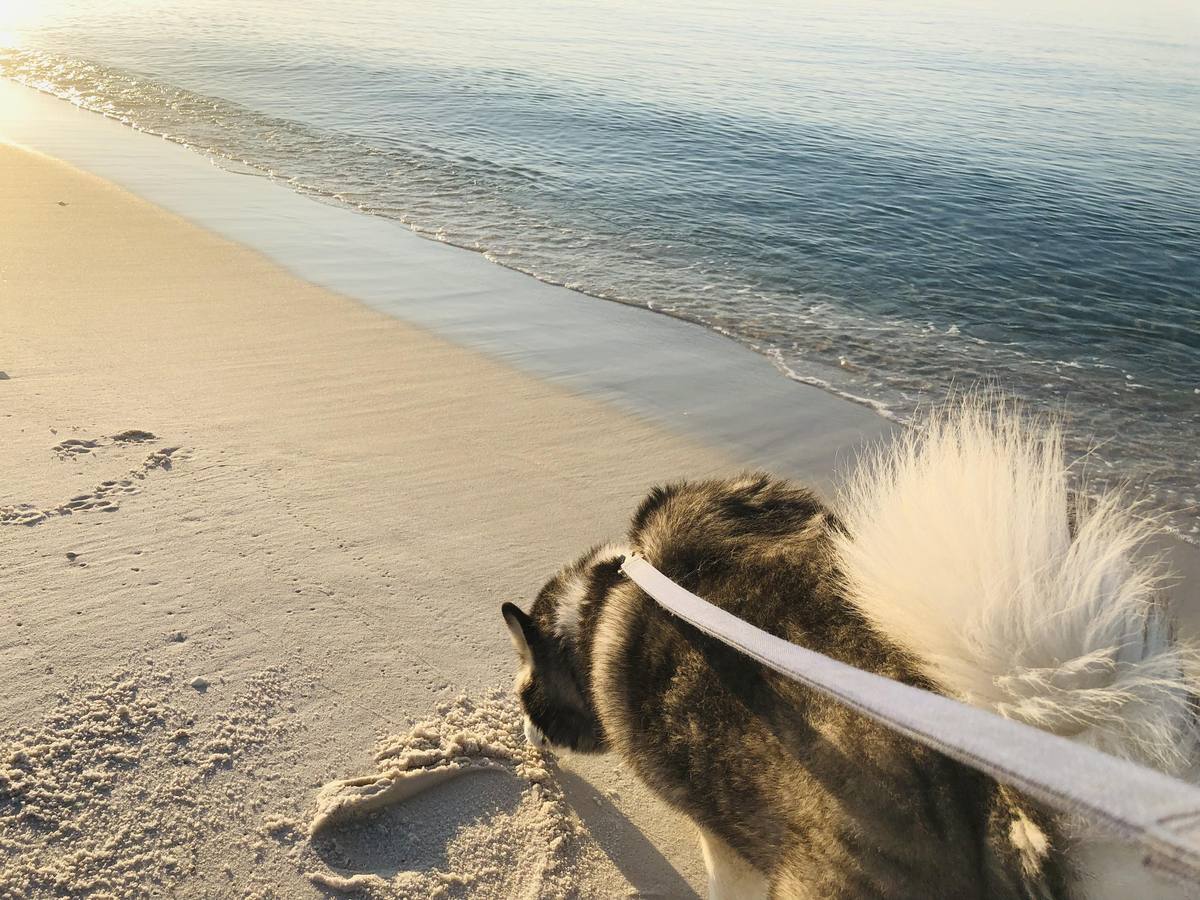
When Little Jay started to look a little fuller around the middle, I told myself it was just his coat. I adjusted his bowl. I walked him a little more. And still, the scale kept creeping up. That's when I started digging into exactly why weight management in a senior Husky is so much harder than it was when he was young — and what I'd have to do differently to actually get ahead of it.
The answer turned out to be complicated, breed-specific, and genuinely important. This article covers all of it.
Why Senior Huskies Gain Weight So Fast
Every dog's metabolism slows with age. But for a Husky specifically, aging hits differently — because of how the breed's metabolism was built to work in the first place.
The Husky's Uniquely Efficient — and Now Problematic — Metabolism
Huskies were bred by the Chukchi people of northeastern Siberia to travel hundreds of kilometers across frozen tundra on minimal food. Every gene involved in their metabolism was shaped by thousands of years of selection for one single trait: doing more with less. The result is a dog whose body is exceptionally good at extracting maximum energy from every calorie consumed, conserving it efficiently, and storing the rest.
Research published in the American Journal of Physiology found that Husky caloric intake varied dramatically by season — rising about 60% higher in winter months than summer. But here's the key insight: when it was warm and caloric intake dropped, their body weight barely changed. Their bodies simply burned less. That extraordinary metabolic flexibility — the ability to throttle metabolism up and down in response to environment and food availability — is what made them legendary sled dogs. It's also exactly what makes them prone to weight gain when activity drops and meals stay constant.
A separate landmark PubMed study tracking the daily energy requirements of Siberian Huskies, Beagles, and Labrador Retrievers found that Huskies showed notably less seasonal variation in caloric intake than shorter-haired breeds — meaning their bodies were already doing the thermoregulatory work internally, burning less in warm months without necessarily eating less. In a working sled dog running 160 kilometers a day, this is an asset. In a senior house pet moving slowly through a suburban neighborhood, it becomes a liability.
What this means practically: a senior Husky's body holds onto every calorie with remarkable efficiency. They don't need to overeat to gain weight — they just need to eat the same amount they always have, in a body that now burns far less.
Sled dog researchers at Oklahoma State University discovered that racing Huskies possess a metabolic "switch" that allows them to reset muscle glycogen stores overnight during multi-day races without additional food intake. The same gene variants driving this extraordinary efficiency exist in your pet Husky — without the 160 km/day race to burn it off.
Hypothyroidism: The Senior Husky's Hidden Weight Trigger
Hypothyroidism — where the thyroid gland underproduces the hormones that regulate metabolism — is one of the most common hormonal conditions in senior and middle-aged Huskies. It doesn't just slow metabolism modestly; it can put it in near-park. The cruel twist: hypothyroid dogs frequently gain weight despite having a normal or even reduced appetite. The scale goes up even though the bowl didn't change. This makes it genuinely invisible to owners who are watching food intake but not watching the thyroid.
Weight gain paired with lethargy, hair loss, a dull or coarse coat, cold sensitivity, or recurring skin and ear infections in a senior Husky should always prompt a thyroid panel at the vet. Hypothyroidism is highly treatable with daily medication — and the weight often normalizes once it is.
Cushing's Disease: Fat Gain That Looks Different
Cushing's disease (hyperadrenocorticism) is another hormonal condition more common in older dogs that directly affects weight and body composition. It causes overproduction of cortisol, which shifts fat distribution — producing the characteristic pot-belly appearance — while simultaneously causing muscle wasting. A Husky with Cushing's may not weigh dramatically more, but they look larger, rounder, and weaker. Other signs include increased thirst and urination, excessive hunger, hair loss, and thin or easily-bruised skin. A blood test can confirm or rule it out.
Muscle Loss That Masquerades as a Weight Problem
As dogs age, they naturally lose lean muscle mass — a process called sarcopenia. Senior dogs lose between 15–25% of their muscle mass between ages 7 and 12. Here's the deceptive part: muscle is denser than fat. A senior Husky can lose significant muscle while gaining fat and show almost no change — or even a decrease — on the scale. Meanwhile their body composition is worsening. They look softer, their endurance drops, and their metabolic rate falls further (because muscle burns more calories at rest than fat does). The scale stops being a reliable indicator of what's actually happening inside the body.
The Appetite That Never Got the Memo About Retirement
Huskies are famously driven eaters when the environment cues them to be. Their ancestral caloric regulation was tied to temperature, exertion, and availability — not to a twice-daily kibble schedule in a climate-controlled house. In practical terms: your senior Husky's appetite can remain robust even as the caloric needs decline sharply. They will finish their bowl. They will beg for treats. They will look at you like they're starving when they have just eaten. This is not manipulation — it's ancient metabolic programming that has lost its original context.
Spay and Neuter: The Hormonal Headwind
Spayed and neutered dogs across all breeds show statistically higher rates of overweight body condition. Hormonal changes following the procedure reduce metabolic rate and alter appetite regulation. For a Husky that already has an efficient metabolism, this effect is compounded — and it's a permanent change to how the body manages energy. If your senior Husky was spayed or neutered, their maintenance calorie requirement is meaningfully lower than the food label estimates, which are typically calculated for intact dogs.
Why Excess Weight Is So Dangerous for Senior Huskies
This is not a cosmetic issue. Fat tissue in dogs is biologically active — it releases inflammatory hormones called adipokines that damage joints, stress organs, and create a systemic environment that accelerates nearly every age-related disease. For a senior Husky who is already dealing with aging joints, a slowing metabolism, and a weakening immune system, excess weight is not a minor inconvenience. It is an accelerant on everything else.
Joint Damage and Arthritis
The most immediate consequence of excess weight in senior Huskies is joint damage. Every extra pound places amplified force on already-aging cartilage. Hip dysplasia — moderately common in Huskies — is directly worsened by additional body weight. But it's not just mechanical load. Fat cells produce inflammatory chemicals called adipocytokines that damage joints even without bearing weight — meaning weight gain harms joints they're not even standing on. For a Husky whose activity is already being curtailed by mild joint pain, additional weight creates a vicious cycle: pain reduces movement, reduced movement causes further weight gain, which causes more pain.
Heart Disease and Respiratory Stress
An overweight senior Husky's heart must pump blood through a larger body mass. Over months and years, this extra cardiac workload contributes to heart failure, reduced stamina, and difficulty breathing — conditions that are already more common in senior dogs regardless of weight. Obesity is also linked to high blood pressure (hypertension) in dogs, which can cause sudden blindness, kidney failure, and cardiac events. Because hypertension is nearly invisible without measurement, it earns the nickname "the silent killer."
Diabetes, Kidney Disease, and Metabolic Cascade
Obesity-driven insulin resistance is a documented pathway to diabetes in dogs. Diabetes is manageable but requires daily monitoring, insulin injections, and dietary precision for life — a significant burden for both dog and owner. Separately, the added metabolic load of carrying excess fat accelerates kidney decline, which is already a common issue in senior dogs. Fatty liver disease can develop as well, impairing an organ that is central to everything from digestion to toxin filtration.
Cancer Risk
Fat tissue is biologically rich in blood vessels and produces hormones that create an inflammatory environment. Research — including estimates from the National Cancer Institute — suggests obesity and physical inactivity may account for 25–30% of major cancers. In dogs, the mechanism is similar: excess adipose tissue promotes chronic inflammation that creates favorable conditions for cancer cell development. Cancer is already the leading cause of death in dogs. Keeping a senior Husky lean is one of the few things within our control that reduces that risk.
A 14-year landmark Purina Life Span Study found that keeping dogs lean can add nearly two years to their life. Separately, a 2018 study in the Journal of Veterinary Internal Medicine found that overweight dogs live up to two and a half years fewer than their ideal-weight counterparts. Being just 10% overweight — a few pounds on a Husky — can reduce lifespan by one-third, according to integrative veterinary research. This is not a minor concern. The weight you don't address at age 8 will show up on the other side of your dog's clock.
Why the Weight-Control Tools That Worked When They Were Young No Longer Cut It
When your Husky was two or three, you had two powerful levers to keep their weight in check: run them hard for two-plus hours a day, and control what goes in the bowl. Both worked reliably. As they age into their senior years, both of those same levers lose their effectiveness — and in the case of hard exercise, become potentially harmful if overused. Understanding why these tools falter at this stage is the first step to replacing them with what actually works now.
- High metabolic rate burns calories readily
- 2+ hours vigorous exercise daily is safe and effective
- Joints can handle running, jumping, trail work
- Portion adjustments have quick, visible results
- Muscle mass responds well to activity
- Thyroid and hormones typically functioning normally
- Metabolic rate significantly reduced
- Vigorous exercise risks joint injury and inflammation
- Arthritis or hip dysplasia may already be developing
- Portion cuts must be steeper — and still may feel insufficient
- Muscle mass harder to maintain; loss accelerates with age
- Thyroid, hormones more likely to be dysregulated
Why Hard Exercise Now Hurts More Than It Helps
For a young Husky, intense running is the cornerstone of weight management. For a senior, it can become the cause of the next vet visit. The cartilage in aging joints degenerates naturally over time — it becomes thinner, less resilient, and less able to absorb impact. High-acceleration activities like running, sudden direction changes, jumping, and rough play apply forces that younger cartilage could handle, but aging cartilage cannot. Each high-impact session causes microtrauma; repeated over time, this accelerates arthritis rather than countering weight gain.
Research from the Canine Arthritis Resources and Education organization confirms that historically, dogs with arthritis were told to rest — a recommendation now understood to be wrong. Appropriate movement is essential for joint health. The key word is appropriate: low-impact, consistent, and controlled — not high-intensity.
Why Portion Control Alone Stops Working as Well
With a younger Husky, cutting portions had a relatively swift effect because their metabolism was burning calories at a reasonable pace. In a senior dog, the metabolic rate has dropped significantly. To achieve the same caloric deficit through food restriction alone, you'd often need to cut portions so aggressively that your dog becomes nutritionally deficient — particularly in the protein they desperately need to maintain muscle mass. Extreme calorie restriction also often just makes a senior Husky more food-obsessed and begging-prone, which is emotionally difficult for owners and often results in extra treats that negate the restriction.
Portion control is still important — it just can't do the whole job alone anymore. The goal shifts to optimizing the composition of what's in the bowl, not just the quantity.
The Best Exercises for a Senior Husky
The mission of exercise for a senior Husky shifts from "burn maximum calories" to something more nuanced: keep joints mobile, slow muscle loss, maintain cardiovascular health, and provide mental stimulation — while protecting aging cartilage and tissue from high-impact stress. These goals are fully achievable. They just require a different exercise vocabulary.
How Much Exercise Is Right?
Most veterinary guidelines recommend a minimum of 30–60 minutes of gentle activity daily for senior dogs — split across multiple sessions rather than in one continuous block. The research is consistent: dogs with arthritis who get over 60 minutes of appropriate daily movement show lower lameness scores than those getting 20 minutes or less. Movement keeps joint fluid circulating, muscles engaged, and weight trending in the right direction. The goal is consistency, not intensity.
Before beginning any new exercise routine for a senior Husky, a full veterinary exam is essential. Senior bloodwork, an assessment of joint health, blood pressure measurement, and cardiac evaluation will tell you where limitations exist and what activities are safe. Exercise that's wrong for your dog's specific condition can cause more harm than inactivity.
Watch for these post-exercise warning signs that a session was too much: limping or lameness, stiffness lasting more than 15–20 minutes after rest, reluctance to rise, excessive panting, or withdrawal from normal activity. These signal that you need to reduce duration or intensity, not push through.
Nutrition: What Actually Works at This Stage
The biggest nutritional mistake with senior Huskies is treating food as a simple calorie-in/calorie-out problem. The reality is more nuanced: you're trying to reduce total calories while simultaneously increasing protein quality, supporting joints, preserving muscle, and managing the breed's tendency toward food obsession. These goals pull in different directions if you're not intentional about how you address them.
Protein: More, Not Less
One of the most persistent myths about senior dog nutrition is that older dogs need less protein to protect their kidneys. For healthy senior dogs without diagnosed kidney disease, the opposite is true. Research indicates that senior dogs lose 15–25% of muscle mass between ages 7 and 12, and that aging dogs may need up to 50% more high-quality protein than younger adults to maintain nitrogen balance and slow muscle loss. Veterinary nutritionists now typically recommend 28–32% protein on a dry-matter basis for healthy senior dogs.
Losing muscle mass is dangerous for a senior Husky not just because of weakness — muscle is metabolically active tissue that burns calories at rest. Every pound of muscle your Husky loses slightly lowers their resting metabolic rate, making weight management even harder. High-quality protein from animal sources (chicken, fish, turkey, lamb) is the primary tool to fight sarcopenia. This is not negotiable.
If your senior Husky has been diagnosed with kidney disease, the protein guidance above does not apply. Moderate protein restriction (18–24%) may be medically necessary to reduce renal load. Always follow your veterinarian's specific recommendations for dogs with known organ disease — this is an area where general guidance and individual medical necessity diverge significantly.
Fat: Reduce, But Don't Eliminate
Fat is calorie-dense (9 calories per gram versus 4 for protein and carbohydrates), so reducing dietary fat is one of the most efficient ways to cut caloric density without drastically shrinking portion size. However, eliminating fat entirely would deprive your senior Husky of the omega-3 fatty acids that support joint health, cognitive function, coat quality, and heart health. The target is a diet with moderate controlled fat — enough to deliver the fatty acid benefits, not so much that it becomes a calorie problem.
Fish oil supplementation (providing EPA and DHA) deserves specific attention. Research consistently shows that omega-3 fatty acids reduce joint inflammation, slow cartilage deterioration, and may reduce the severity of existing arthritis. For a senior Husky fighting both weight and joint issues simultaneously, this is one of the most evidence-backed supplements available.
Fiber: The Satiety Tool
Fiber provides volume without calories — it helps your Husky feel full after eating without increasing their caloric load. For a breed with a persistent appetite drive, this is especially valuable. Senior-formulated dog foods typically contain higher fiber levels for this reason. If you want to add fiber without changing food entirely, plain cooked pumpkin, green beans, or cooked sweet potato are excellent options that most Huskies enjoy and that veterinarians regularly recommend.
Move to a Senior-Formulated Food — and Watch Portion Sizes Closely
Senior-specific dog foods are formulated to be lower in caloric density than adult maintenance formulas, with adjusted fat levels and appropriate fiber content. Transitioning a senior Husky to a quality senior formula is one of the single most impactful dietary changes you can make. The transition should be gradual (over 7–10 days) to avoid digestive upset.
Portion sizes should be measured — not estimated, not eyeballed. A standard measuring cup, used consistently, makes an enormous difference. The feeding guidelines on dog food bags are typically calculated for intact adult dogs at moderate activity levels. For a spayed or neutered, lower-activity senior Husky, the real maintenance amount is often 10–20% below the bag's recommendation. Your veterinarian can help calculate your dog's actual daily calorie target.
Meal Frequency and Timing
Feeding two to three measured meals per day — rather than free-feeding or one large meal — helps stabilize blood sugar, reduce begging behavior between meals, and supports more consistent digestion. Never leave food out all day for a senior Husky to graze; the breed's appetite regulation is not reliable enough to self-limit.
Treats: The Hidden Calorie Problem
Treats are where many senior Husky weight plans quietly fail. Veterinary guidelines suggest treats should not exceed 10% of daily caloric intake — but most owners dramatically undercount treat calories. A single large commercial biscuit can contain 100+ calories; a few given throughout the day can represent 20–30% of a senior Husky's daily caloric budget. Replace high-calorie commercial treats with lower-calorie alternatives: plain cooked chicken pieces, blueberries, carrot slices, or cucumber chunks deliver reward value with minimal caloric impact.
Joint-Supporting Supplements to Consider
- Glucosamine and chondroitin — Support cartilage integrity and joint fluid. Many veterinarians recommend starting proactively at age 7–8, before arthritis becomes clinical.
- Fish oil (EPA/DHA) — Anti-inflammatory, joint-protective, supports coat and cognitive function. One of the most evidence-backed supplements for senior dogs.
- L-carnitine — A vitamin-like compound found in red meats and fish that helps escort fat into mitochondria for energy conversion. IAMS research has demonstrated it can support weight reduction in overweight dogs.
- Vitamin D — Emerging research suggests a connection between vitamin D and muscle mass preservation (anti-sarcopenia). Discuss appropriate levels with your veterinarian, as both deficiency and excess are harmful.
What Owners Commonly Get Wrong
Most of the weight management failures I've seen — and personally experienced — come down to a handful of consistent errors. If any of these land, they're not criticism: they're almost universal.
Mistake 1: Using the Scale as the Only Metric
A senior Husky can look larger and feel heavier while the scale shows little change — because they're losing muscle (which is denser and heavier) while gaining fat (which is lighter but takes up more space). Conversely, a dog can be losing weight but in the worst possible way: muscle wasting from inadequate protein rather than fat loss from appropriate calorie restriction. The scale tells you one number. What you actually need to track is body condition score (BCS) — a hands-on assessment of rib visibility, waist definition, and abdominal tuck. Ask your vet to teach you how to assess it at home, and use it regularly.
Mistake 2: Treating Treats as "Free"
Treats are counted in a dog's total daily calories. Every member of the household who gives treats needs to know how many calories those treats contain and how they count against the day's total. This is especially critical in multi-person households where multiple people are giving treats independently. Consider keeping a daily treat log — even just a tally on the fridge — for a few weeks to understand what's actually being consumed beyond the main meals.
Mistake 3: Assuming "No Changes = Nothing Wrong Medically"
Owners who have tightened diet and maintained exercise often assume that continued weight gain just means they need to cut more. But steady weight gain despite genuine dietary control is a red flag for hypothyroidism, Cushing's disease, or other hormonal conditions. If your senior Husky is gaining weight and you've actually made meaningful changes to diet and exercise, ask your vet for a full hormonal workup — including thyroid panel, cortisol levels, and urinalysis — before concluding that you just need to restrict more calories. Treating an underlying condition may resolve what no diet change can.
Mistake 4: Interpreting Guilt as Hunger
Huskies are extraordinarily expressive. A senior Husky that is perfectly full will still make an exceptional case that they are dying of starvation. Many owners respond to begging by adding a handful of food to the bowl, offering an extra treat, or switching to a more calorie-dense food "because he seems hungry all the time." This is the metabolic trap: feeding to satisfy apparent demand rather than actual caloric need. If your Husky has been assessed at a healthy weight and is eating an appropriate amount, the begging is behavioral, not biological. Addressing it requires redirection — a puzzle toy, a training session, a walk — not more food.
Mistake 5: Avoiding Exercise Because of Arthritis Pain
When a senior Husky shows signs of joint pain — reluctance to rise, stiffness, or limping — the instinct is to let them rest. For some high-impact activities, this is correct. But eliminating movement altogether is exactly wrong. Inactivity causes further muscle loss, further joint stiffening, further weight gain, and further pain. The answer is not rest — it's appropriate movement. Swimming, short walks, and gentle range-of-motion exercises keep joints mobile and muscles engaged without the inflammatory impact of running. Work with your vet to distinguish between activities to avoid and activities to substitute.
Mistake 6: Waiting Too Long to Act
Weight gain in senior dogs is slow and gradual — it's easy to not notice it until it's significant. And once the weight is on, especially in a dog with developing arthritis, it becomes harder to remove because exercise capacity is already reduced. The best time to start managing your senior Husky's weight is before they're overweight. If your Husky is 7 years old and their weight is creeping upward, that is the moment to intervene — not when they're 10 and struggling to get off the floor.
A Word of Encouragement
This is genuinely hard. Managing the weight of a senior Husky means fighting against a metabolism built for Arctic survival, a breed-level food drive that doesn't respect retirement, aging joints that limit the most effective form of calorie burning, and a set of hormonal shifts you may not even be aware of. You're not failing if it's difficult. You're fighting something real.
But it is also deeply winnable. The Purina Life Span Study showed that lean dogs live nearly two years longer — and those years are better years. More walks that don't end in limping. More mornings where getting up off the floor doesn't look painful. More energy for the slow sniff around the neighborhood that's become your senior Husky's version of an adventure.
"You don't need to make your senior Husky young again. You need to make the weight manageable enough that the joints hurt less, the heart works easier, and the days are longer."
— Be encouraged, from SeniorHusky.comGet the vet exam. Get the bloodwork. Learn to feel for body condition instead of just reading the scale. Swap the afternoon run for a swim or a sniff walk. Measure the meals. Replace the biscuits with blueberries. None of it is dramatic. All of it adds up.
Your senior Husky gave you years of energy and stubbornness and unconditional noise. They deserve the most capable version of you looking after them now. You've got this.
Nothing in this article constitutes veterinary medical advice. All content is for informational and educational purposes only. Individual dogs vary significantly — breed generalizations and population-level research may not apply to every individual animal. Always consult a licensed veterinarian before making changes to your dog's diet, exercise routine, medications, or supplementation.
Where specific conditions such as hypothyroidism, Cushing's disease, kidney disease, or arthritis are mentioned, these require formal veterinary diagnosis. Do not attempt to self-diagnose or treat your dog based on the descriptions in this article. Statistics cited reflect population-level averages from published research and may not reflect every individual dog's outcome.
This article may contain affiliate links to products we recommend. These do not affect our editorial content or recommendations.